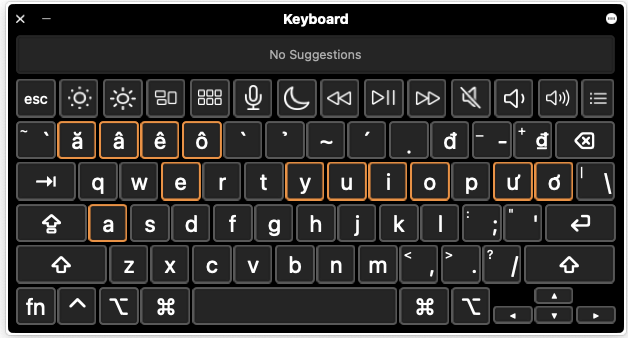
Mac电脑 - 虚拟键盘使用说明
Follow these steps to set up a language keyboard on your Mac.
Just need the language-specific instructions? Skip to language selection ↓
Step 1. Open System Settings
Open System Settings from the Apple menu in the top-left corner of your Mac.

Step 2. Open Keyboard settings
Select Keyboard from the left sidebar, then click Edit under Text Input.

Step 3. Add an input source
Click the + button at the bottom-left of the Input Sources window.

Step 4. Choose your language and input source
In the Input Sources window, choose the language and input source shown below, then select 添加.
Step 5. Switch input sources and start typing
After adding the input source, select the Input menu near the top-right of your Mac screen and choose Ge’ez.
Don’t see the Input menu? In System Settings → Keyboard → Text Input, select Edit, then enable Show Input menu in menu bar.
View the on-screen keyboard
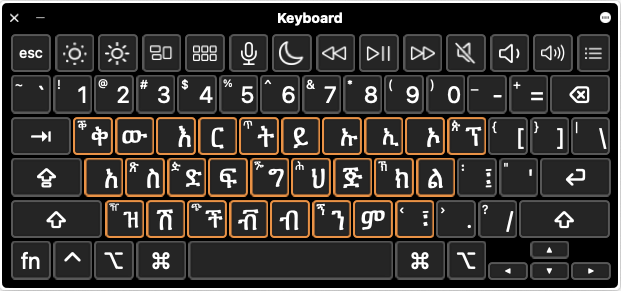
To see the characters and keys for your selected input source, open the Input menu in the Mac menu bar and select Show Keyboard Viewer. This is optional.
Try typing
Select your input source on your Mac before typing here. Choosing a language above only changes the instructions.
Type accented characters
Press and hold a letter (such as a) to display available accented characters. Select one with your mouse or press its corresponding number.
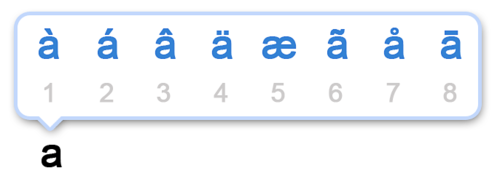
If the accent menu does not appear, key repeat may be enabled instead.
Mac language content (editor reference)
Edit these expanders to change the language-specific instructions and keyboard images in Step 4. Keep each expander ID unique. The first “Choose Language > Input Source” paragraph supplies the selected input-source name shown in Step 5. The small amg-input-glyph span in that same paragraph supplies the badge shown in Step 4, Step 5, and the Keyboard Viewer illustration. Edit the badge text directly in this ordinary Gutenberg paragraph. The Ge’ez, Pashto, Persian, and Urdu symbols are visual approximations that may need fine-tuning. Tigrinya has no glyph because it uses alternative guidance. Only the keyboard screenshot images have the amg-keyboard-image class to make them full-width. Other Gutenberg paragraphs, images, and notices remain unchanged. This section is invisible on the published page, but remains editable here.
阿姆哈拉语
Choose 阿姆哈拉语 > Ge’ez
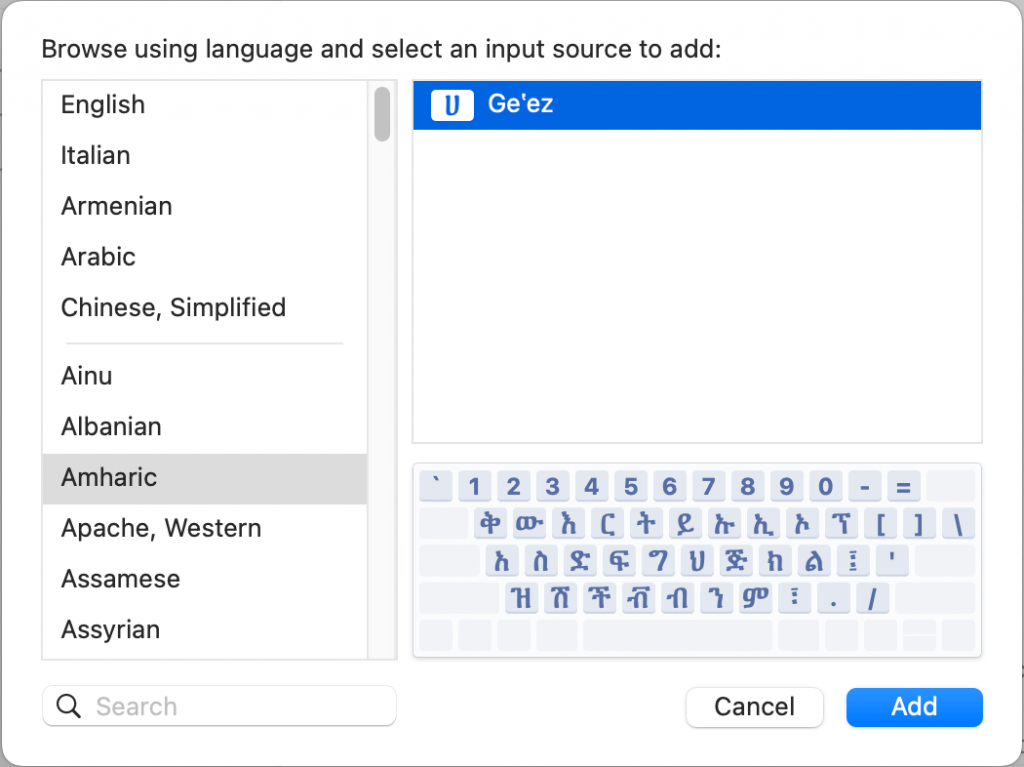
The 阿姆哈拉语 keyboard will look like this:
阿拉伯语
Choose 阿拉伯语 > 阿拉伯语
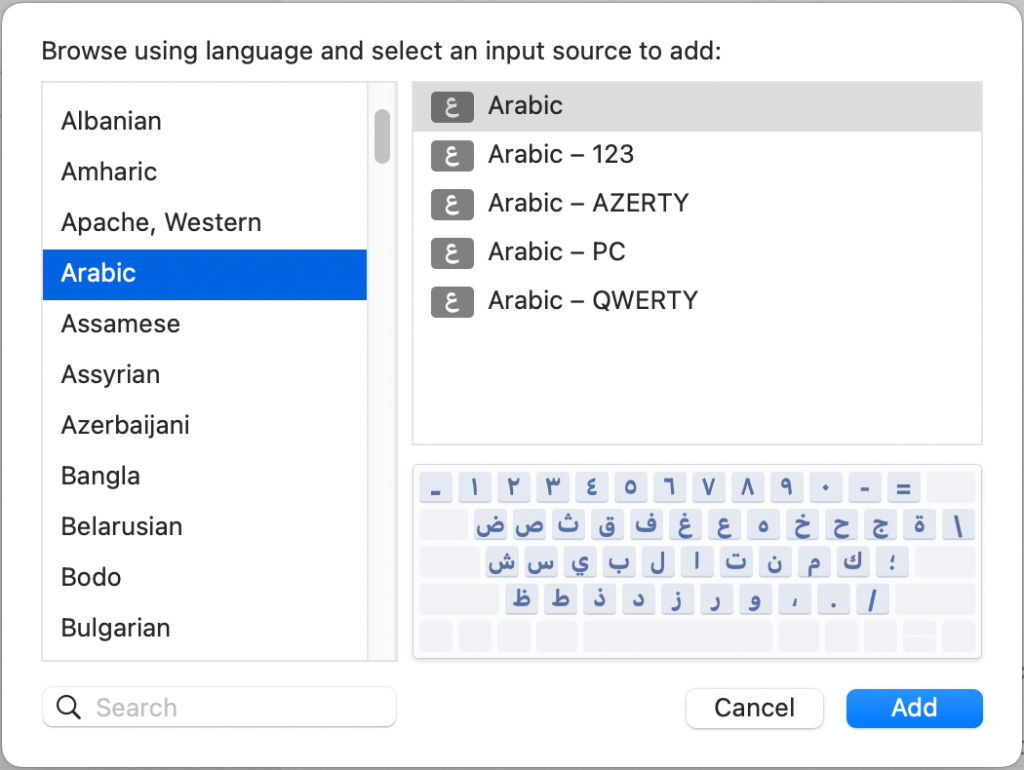
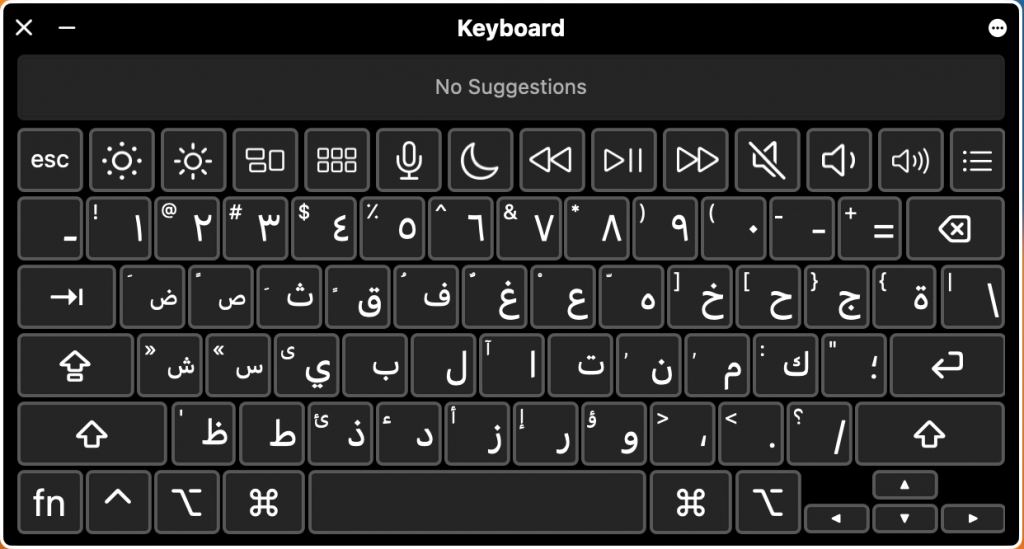
The 阿拉伯语 keyboard will look like this:
亚美尼亚
Choose 亚美尼亚 > Armenian – HM QWERTY
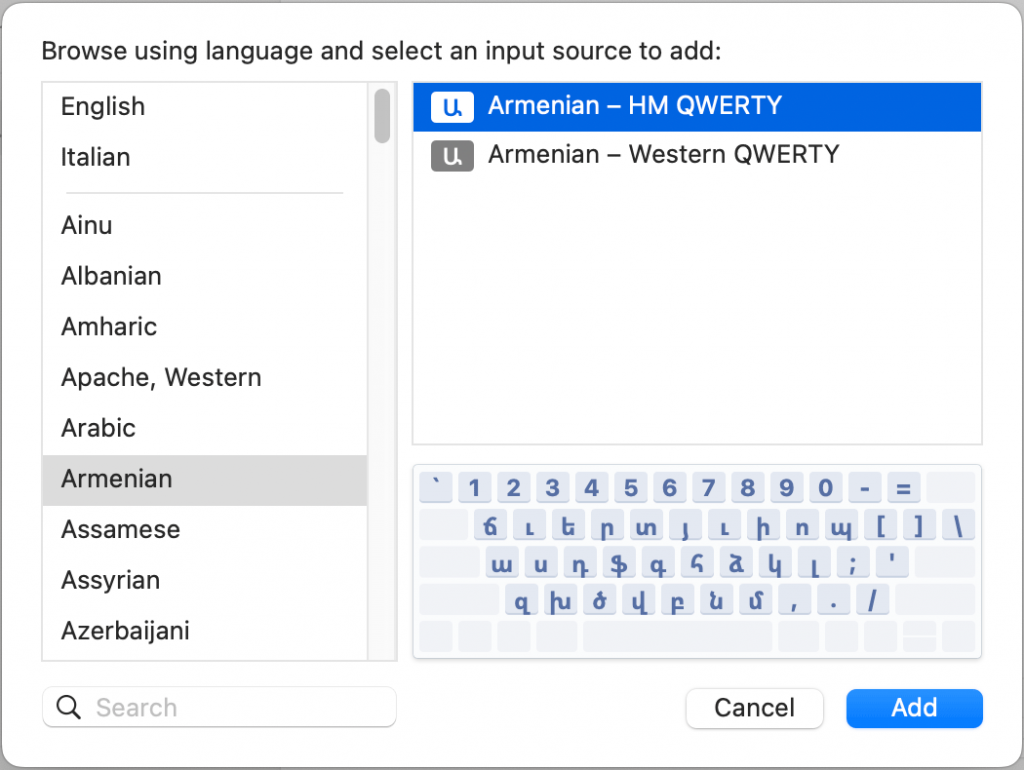
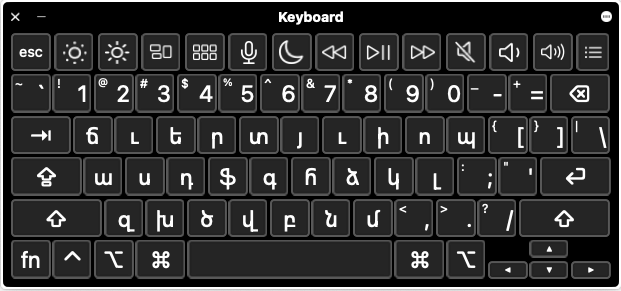
The 亚美尼亚 keyboard will look like this:
孟加拉
Choose Manipuri (Bangala) > Manipuri (Bengali) – Standard
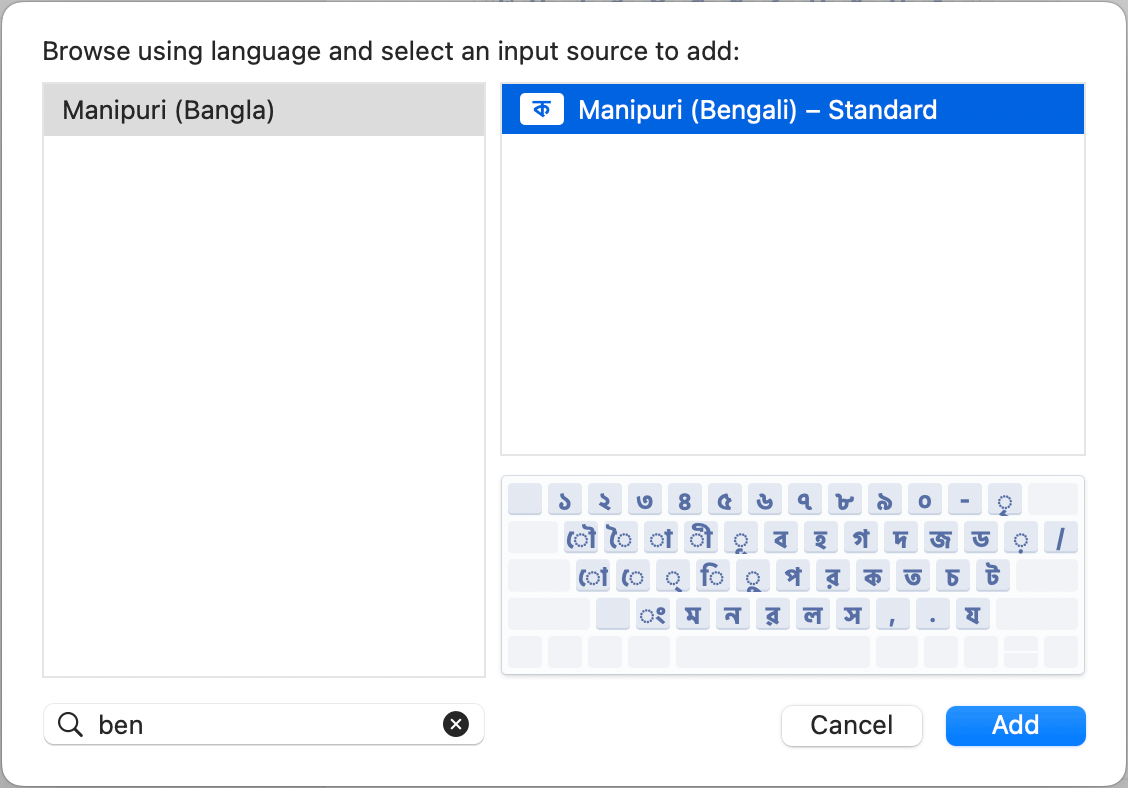
The 孟加拉 keyboard will look like this:
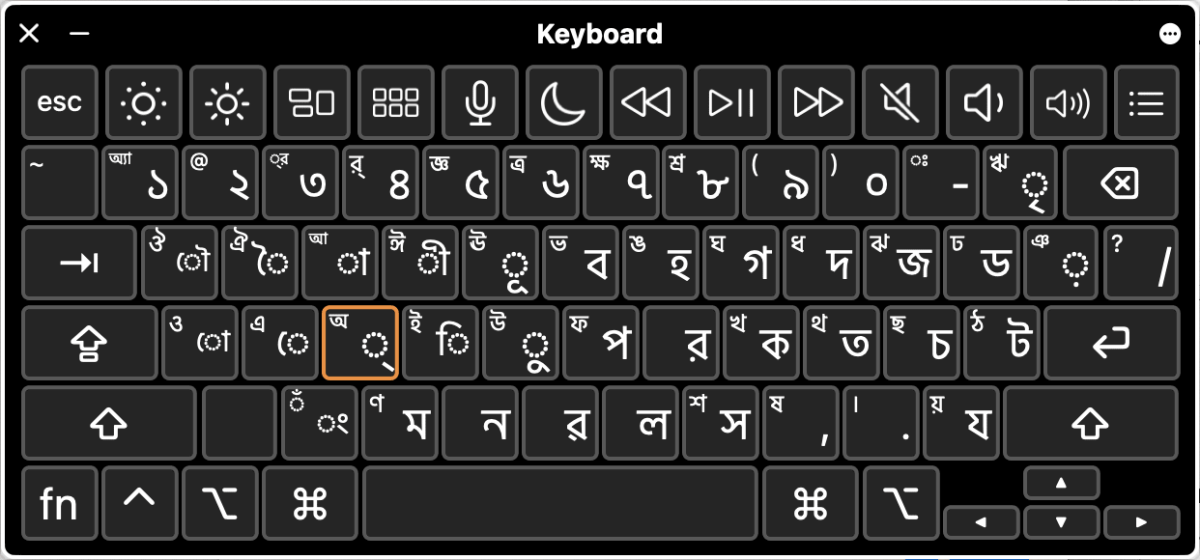
粤语
For Cantonese, use the Chinese Traditional input source instructions below.
Choose Chinese Traditional > Pinyin – Traditional
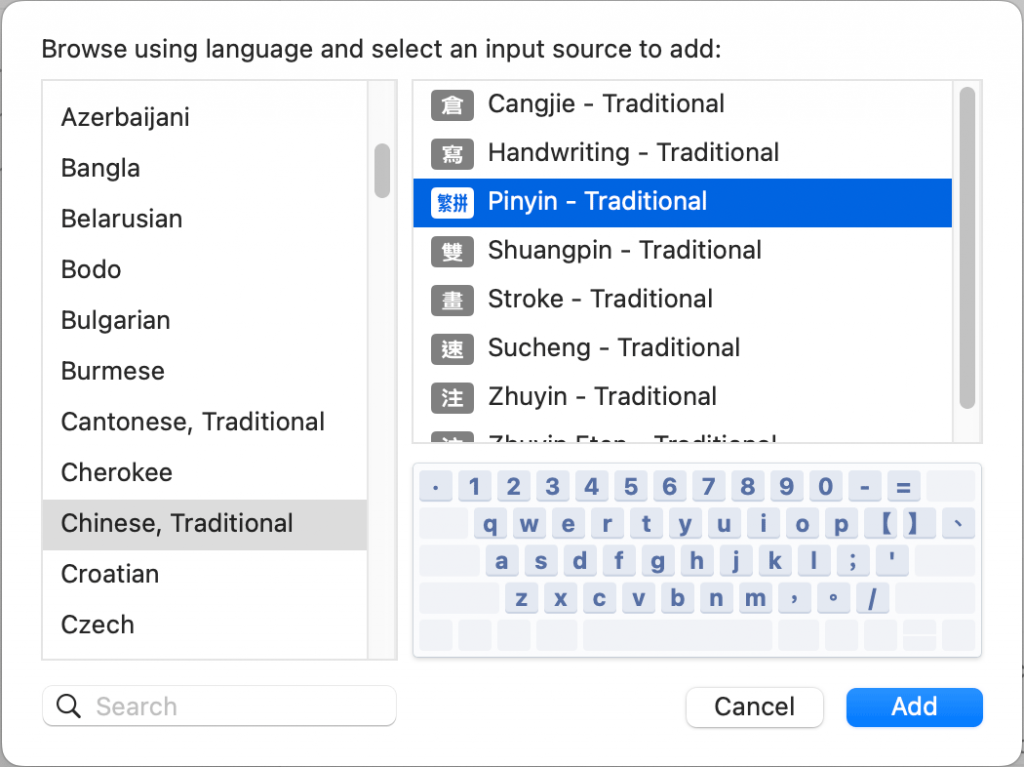
Note: Pinyin uses Latin letters to enter pronunciation, then converts your selection into Chinese characters. The keyboard shown below is the typing layout, not a character-per-key map.
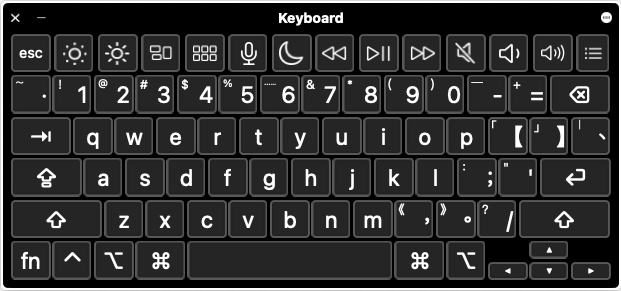
Important: Cantonese responses must use Chinese characters, not Romanized pronunciation. Responses written in romanized text instead of Chinese characters receive an NR (Not Ratable) score.
Chinese Simplified
Choose Chinese, Simplified > Pinyin Simplified
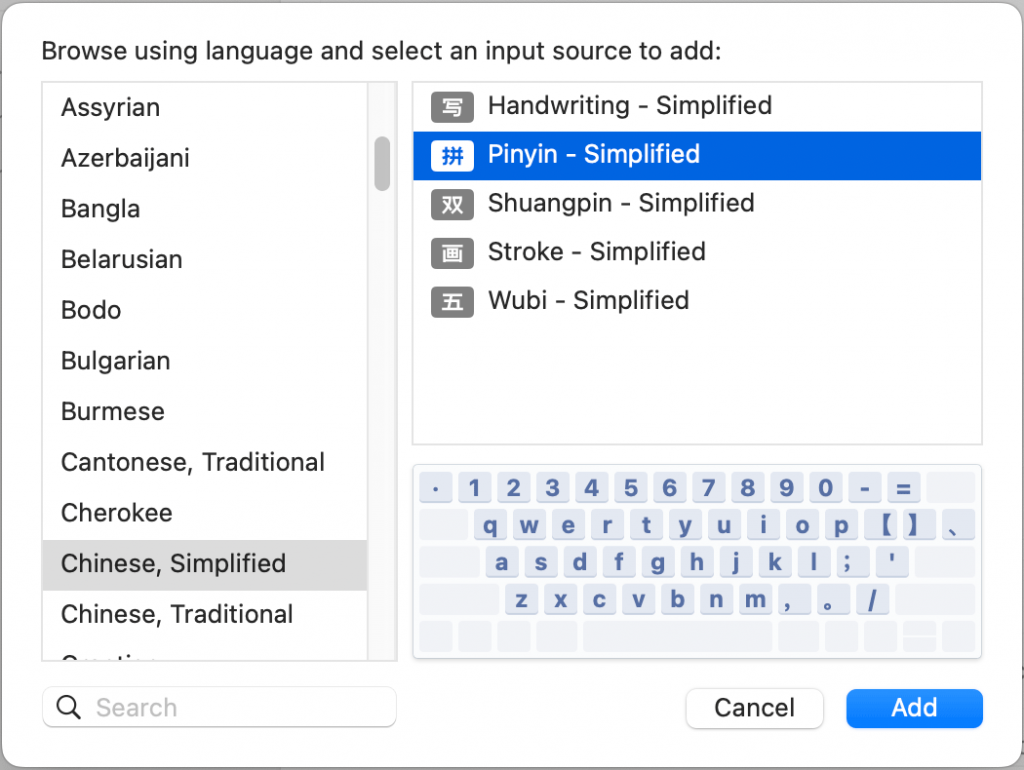
Note: Pinyin uses Latin letters to enter pronunciation, then converts your selection into Chinese characters. The keyboard shown below is the typing layout, not a character-per-key map.
How to Type in Chinese Simplified:
- Typing in Chinese Simplified begins with typing the pronunciation of the word (Pinyin) and then hitting the space bar to bring up a list of Chinese Simplified characters to choose from.
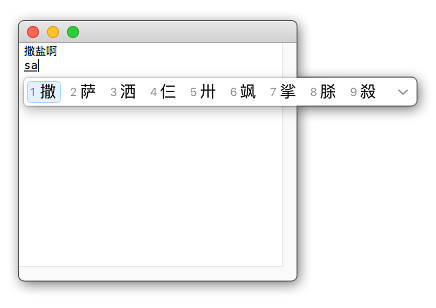
Important: Responses written in Pinyin instead of Chinese characters receive an NR (Not Ratable) score. Test takers must use Chinese characters.
Pinyin is the Romanization of Chinese characters based on their pronunciation.
Chinese Traditional
Choose Chinese Traditional > Pinyin – Traditional
Note: Pinyin uses Latin letters to enter pronunciation, then converts your selection into Chinese characters. The keyboard shown below is the typing layout, not a character-per-key map.
Important: Responses written in Pinyin instead of Chinese characters receive an NR (Not Ratable) score. Test takers must use Chinese characters.
希腊
Choose 希腊 > 希腊
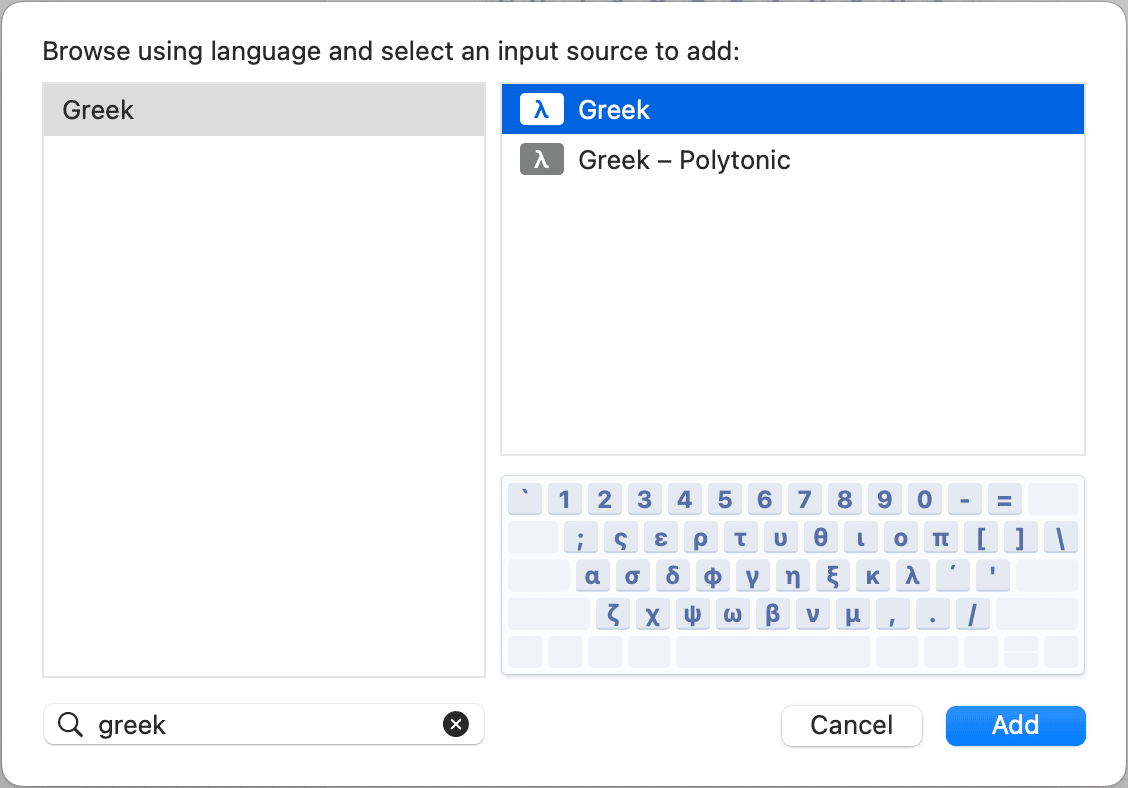
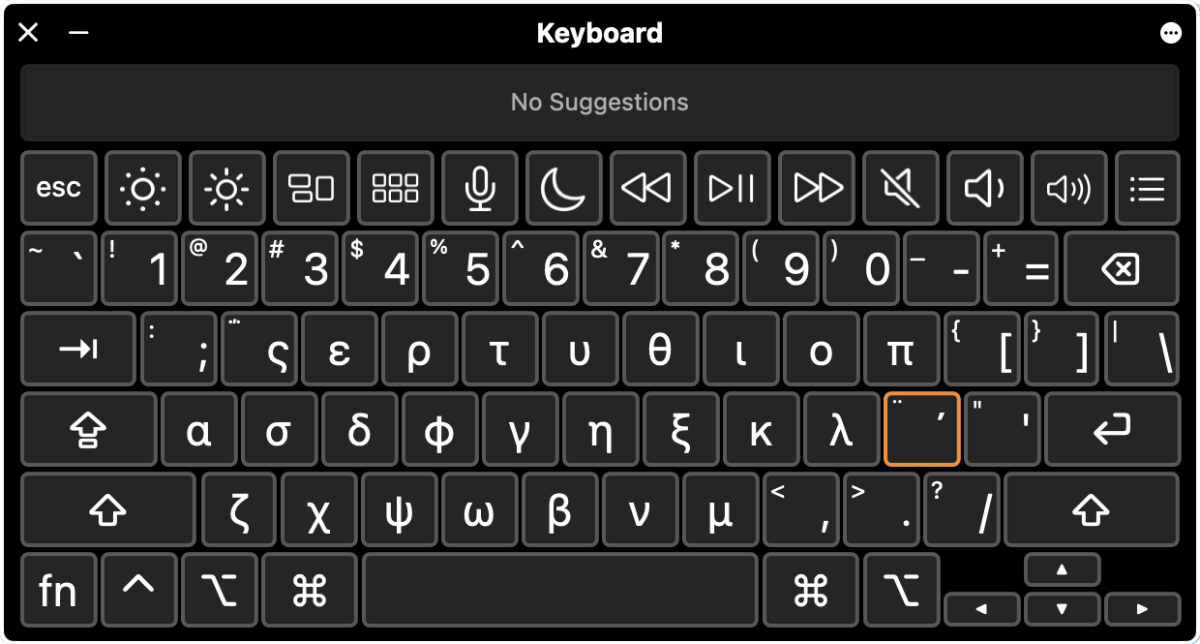
The 希腊 keyboard will look like this:
希伯来语
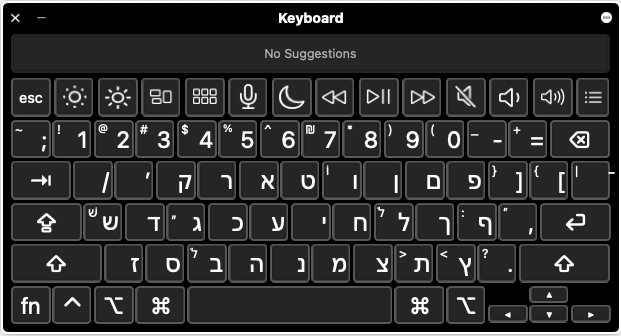
Choose 希伯来语 > 希伯来语
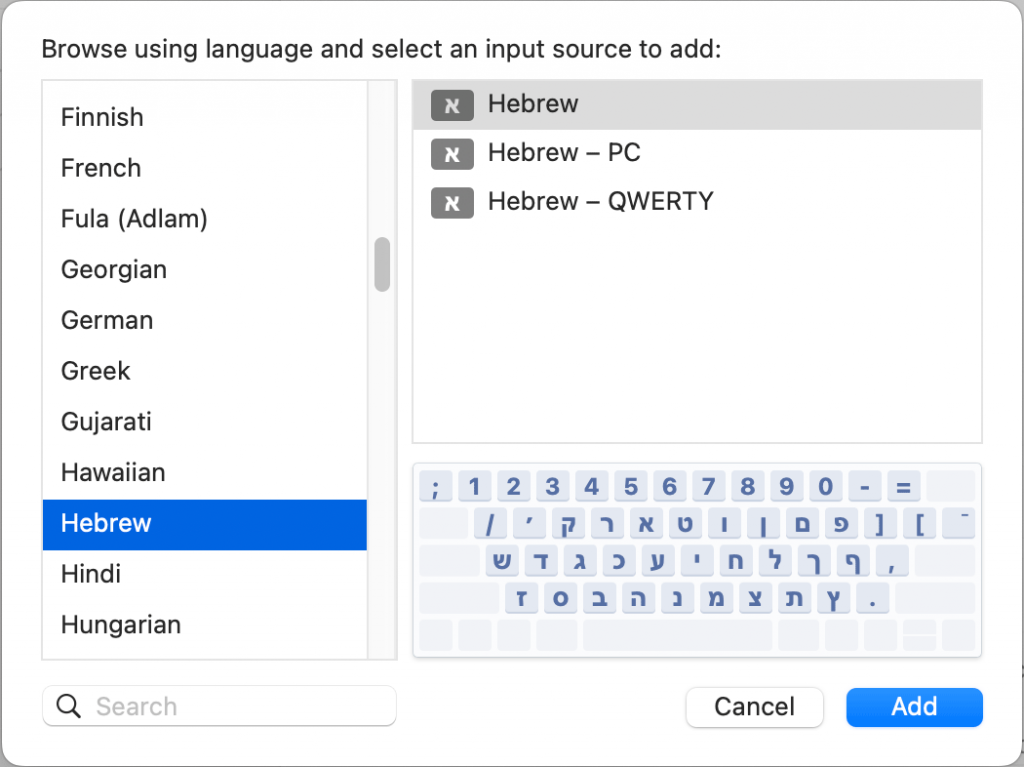
The 希伯来语 keyboard will look like this:
印地语
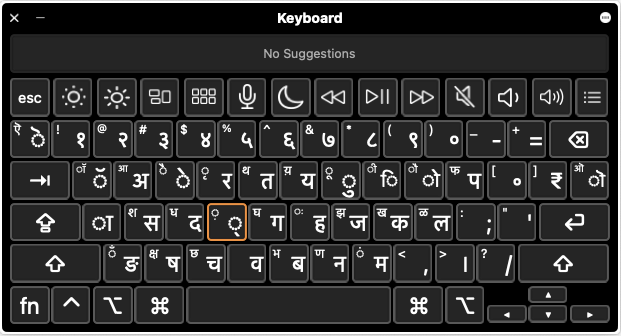
Choose 印地语 > Devanagari – QWERTY
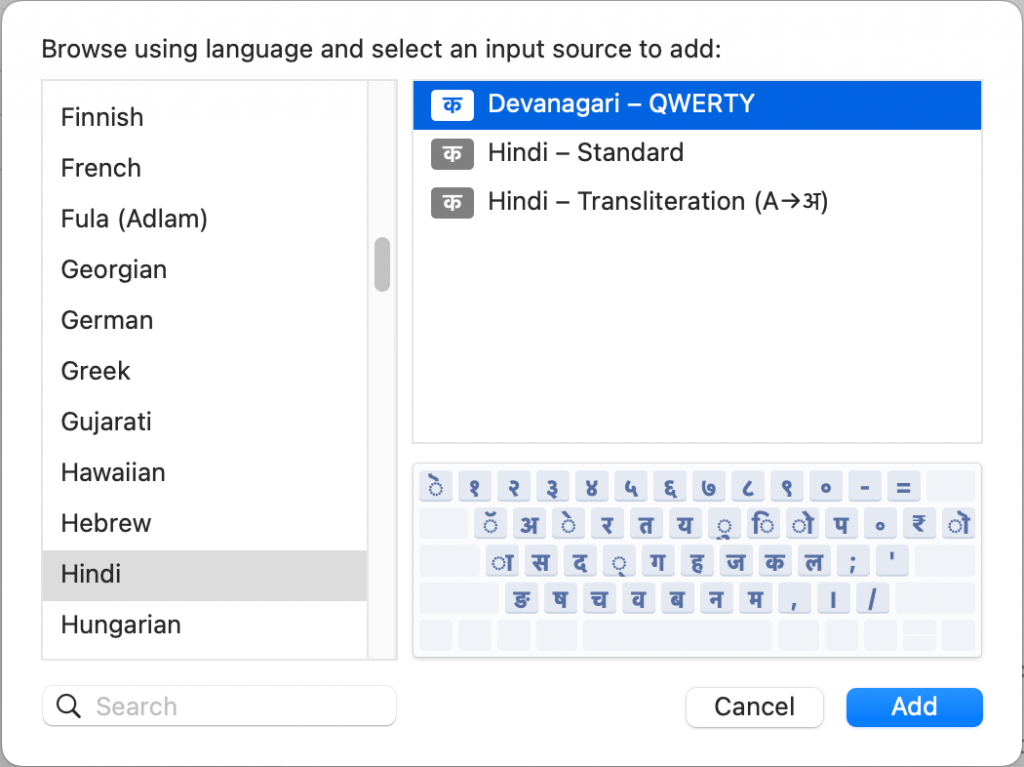
The 印地语 > Devanagari – QWERTY keyboard will look like this:
日本人
Choose 日本人 > Japanese – Romaji
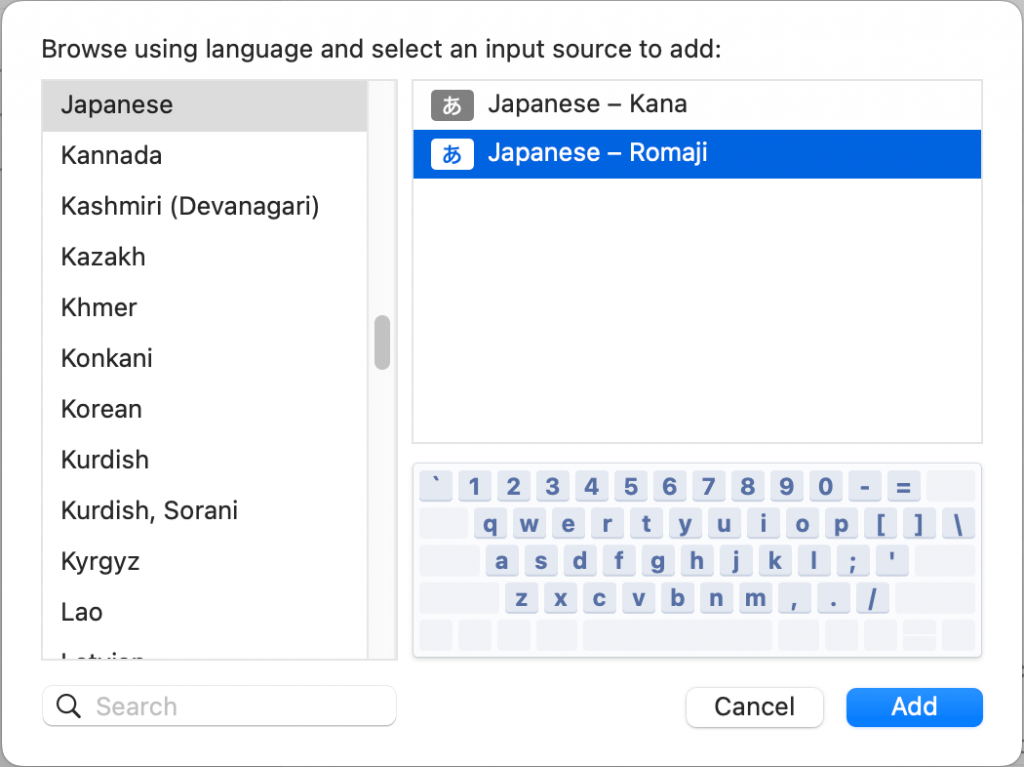
Note: With Japanese – Romaji, type pronunciation using Latin letters, then choose Japanese characters. The keyboard shown below is the typing layout, not a character-per-key map.
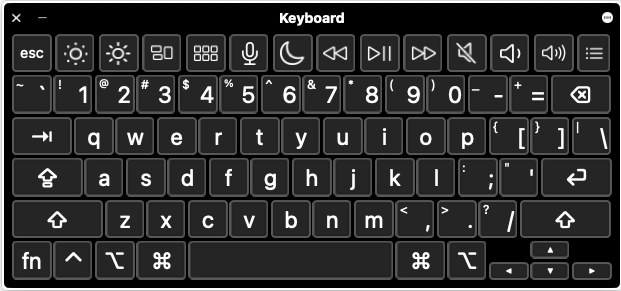
Important: Responses written in Romaji instead of Hiragana, Katakana, or Kanji receive an NR (Not Ratable) score. Test takers must use Japanese characters.
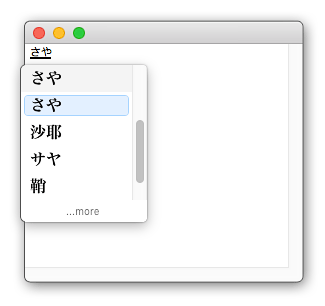
Romaji uses Latin letters to represent the pronunciation of Japanese words.
Type in Japanese:
- Type pronunciation with Latin letters, press Space, and select the correct Japanese characters.
- Some characters may require Shift.
卡纳达语
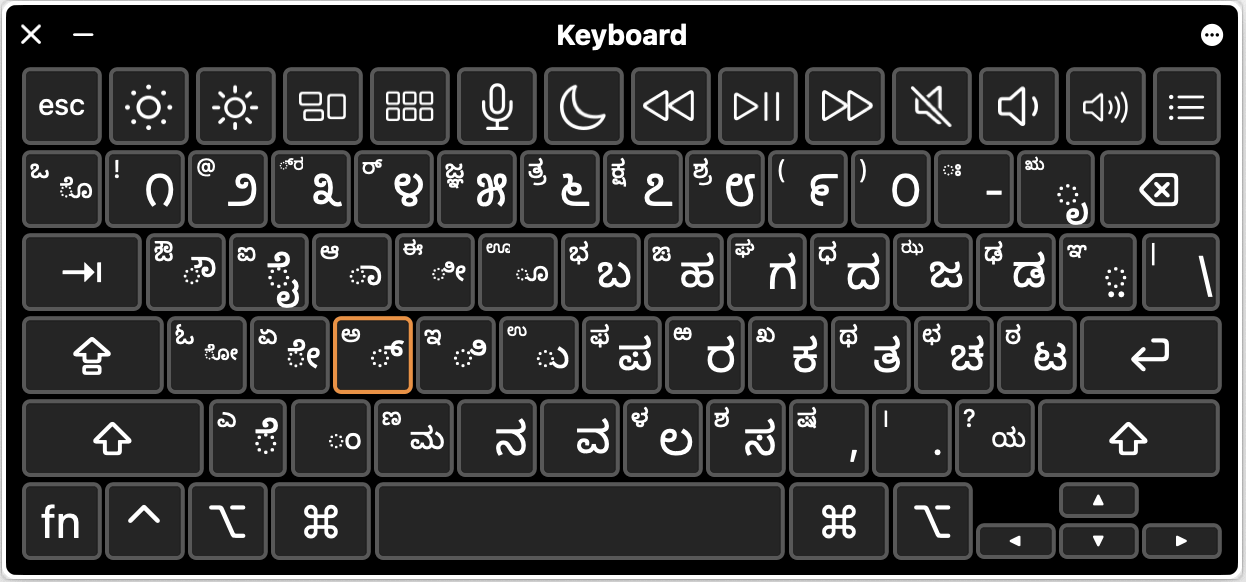
Choose 卡纳达语 > Kannada – Standard
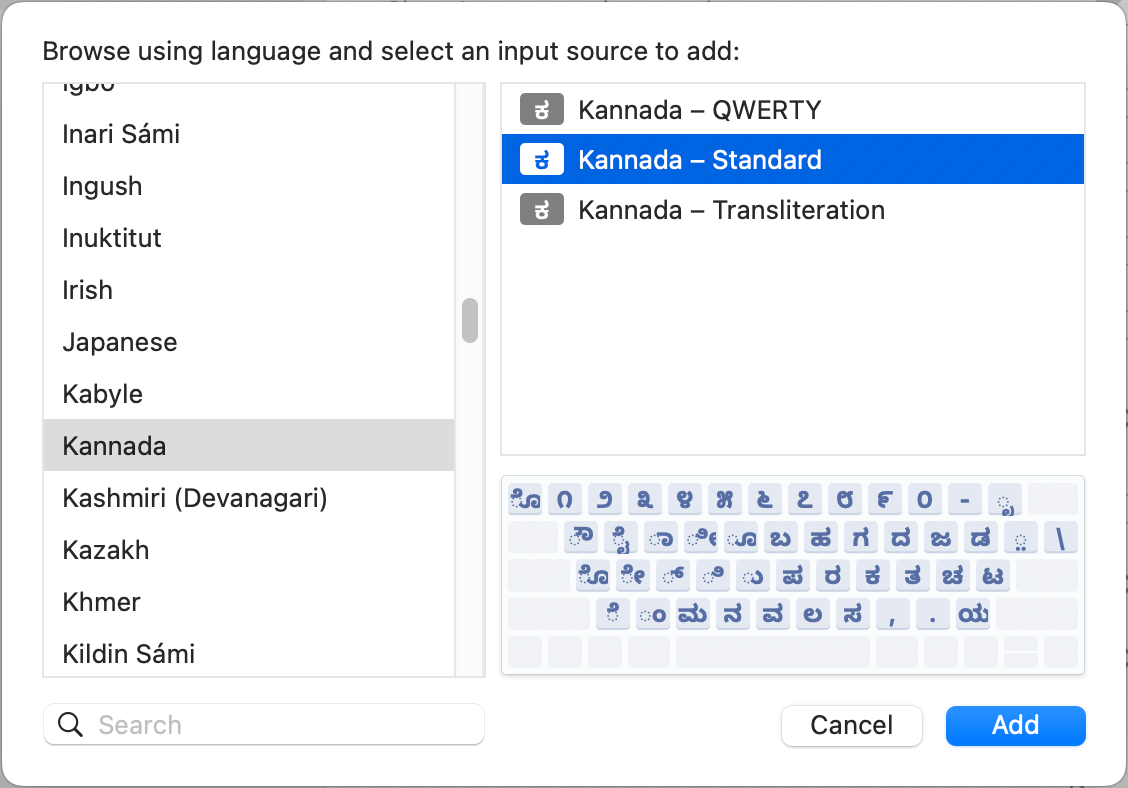
The 卡纳达语 keyboard will look like this:
高棉
Choose 高棉 > 高棉

The 高棉 keyboard will look like this:

韩国
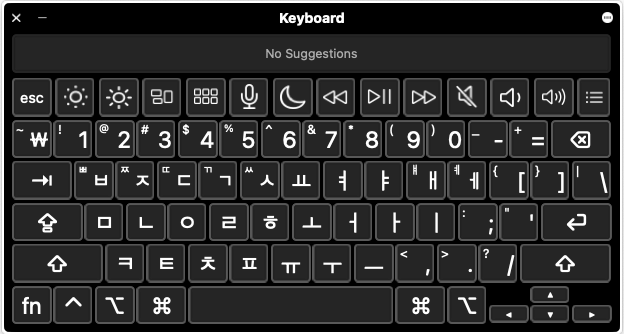
Choose 韩国 > 2-Set Korean
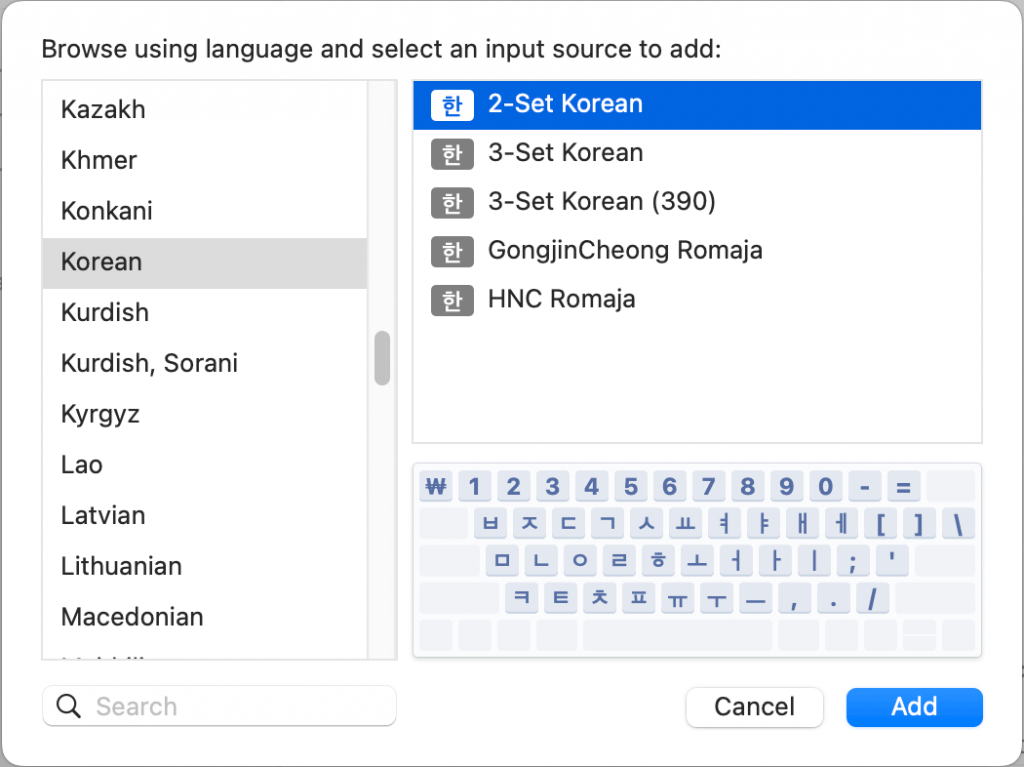
The 韩国 keyboard will look like this:
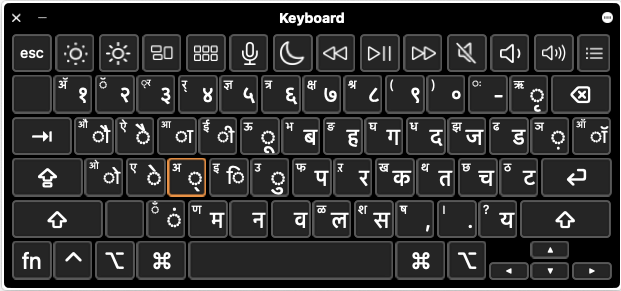
马拉地语
Choose 马拉地语 > Marathi – Standard
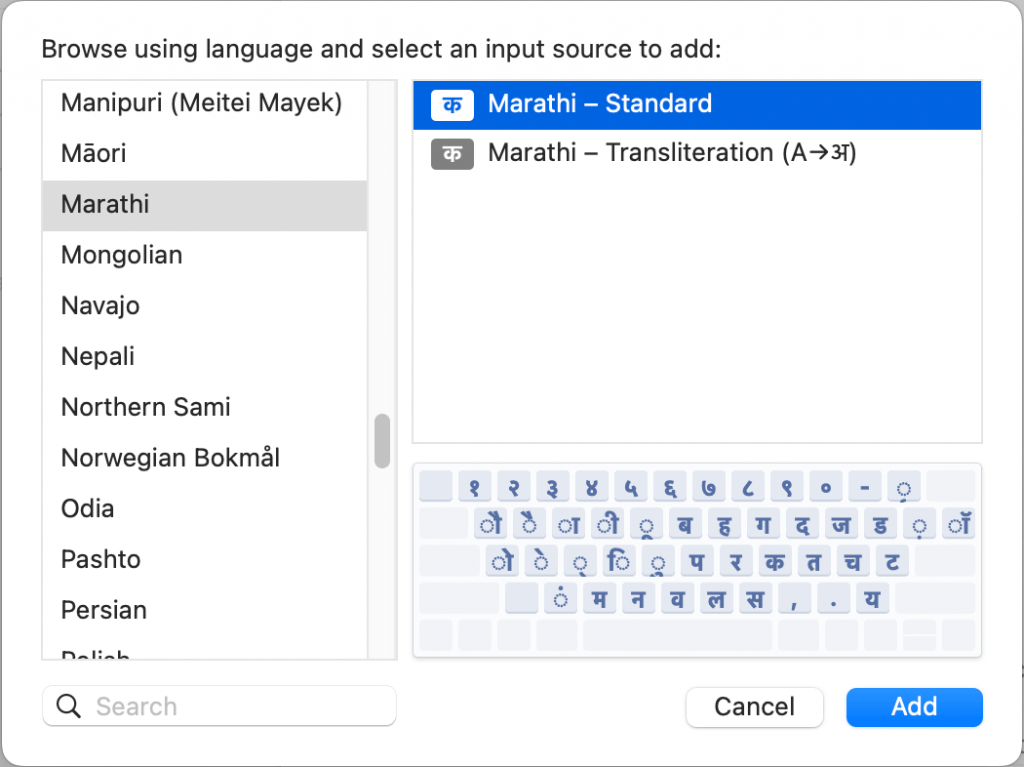
The 马拉地语 keyboard will look like this:
尼泊尔语
Choose 尼泊尔语 > Nepali – Standard (India)

The 尼泊尔语 keyboard will look like this:

普什图语
Choose 普什图语 > Afghan Pashto

The 普什图语 keyboard will look like this:

波斯语-法尔西语
Choose Persian > Persian – Standard

The Persian keyboard will look like this:

旁遮普语
Choose 旁遮普语 > Gurmukhi – Standard

The 旁遮普语 keyboard will look like this:

俄罗斯
Choose 俄罗斯 > 俄罗斯
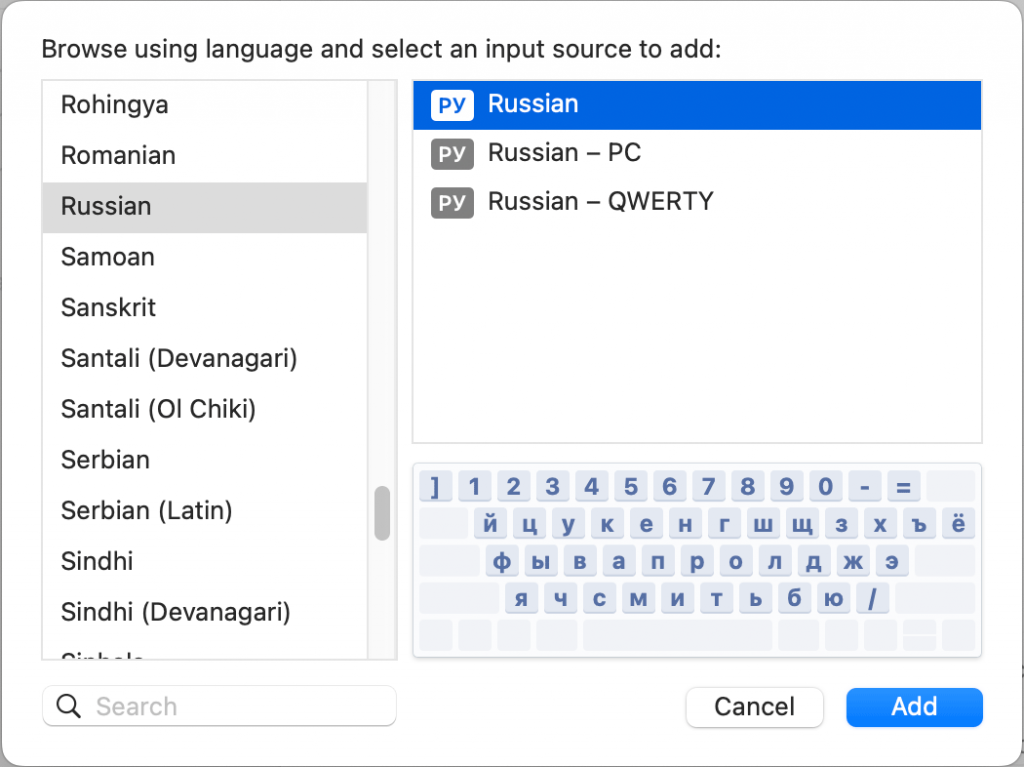
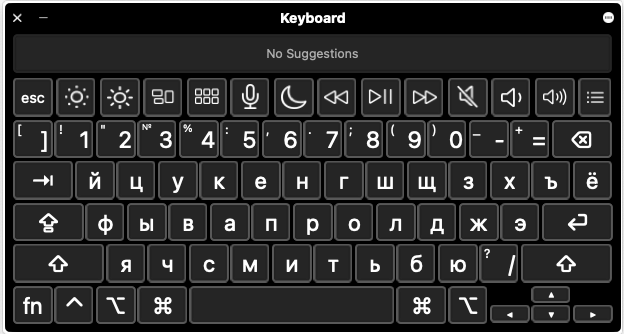
The 俄罗斯 keyboard will look like this:
泰米尔
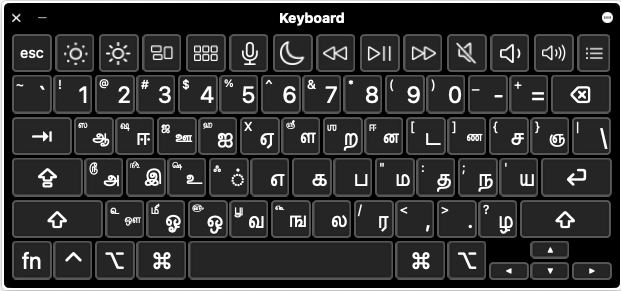
Choose 泰米尔 > Tamil 99
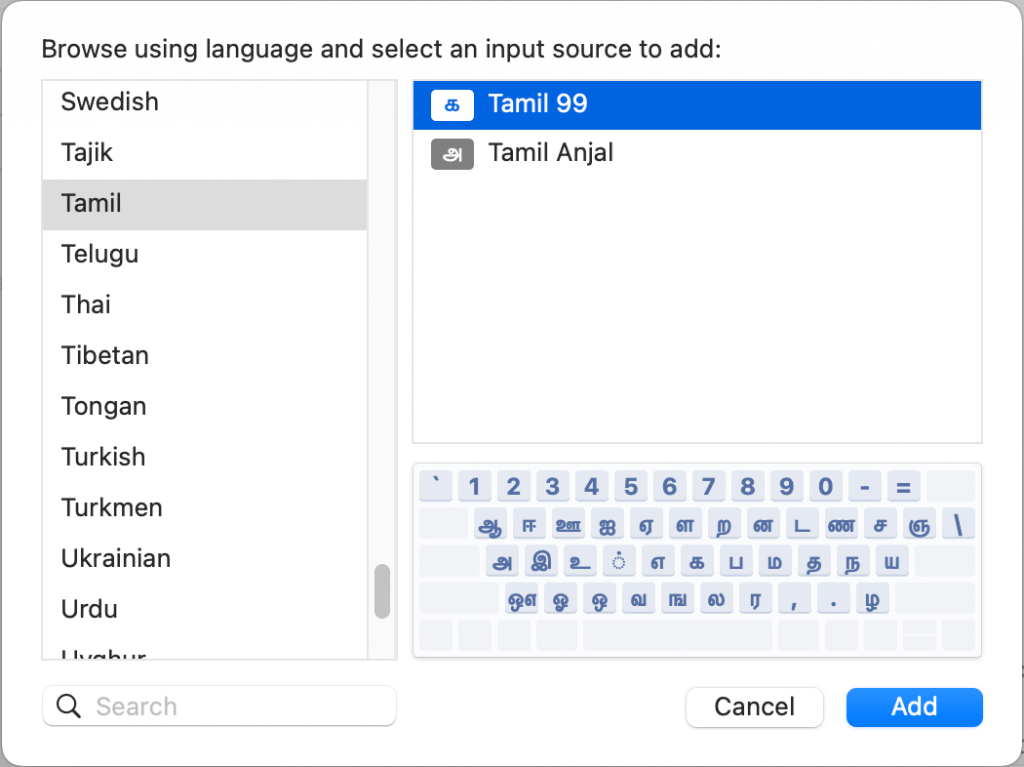
The 泰米尔 keyboard will look like this:
泰卢固语
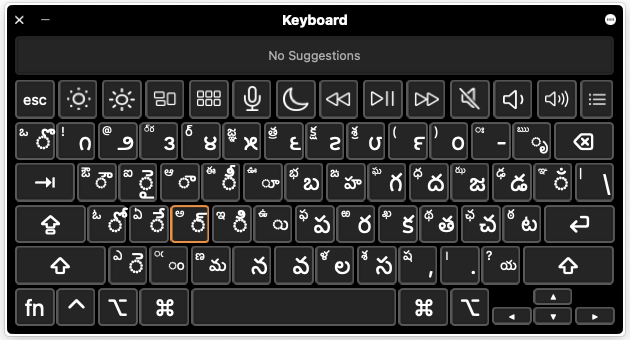
Choose 泰卢固语 > Telugu – Standard
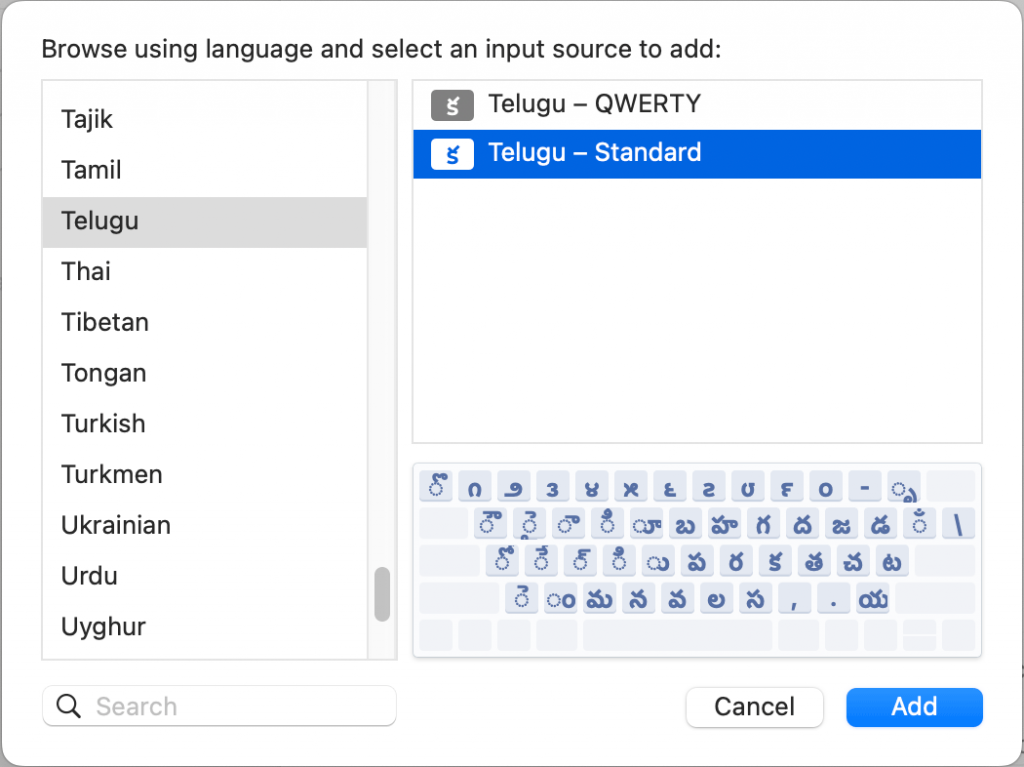
The 泰卢固语 keyboard will look like this:
泰国
Choose 泰国 > 泰国

The 泰国 keyboard will look like this:

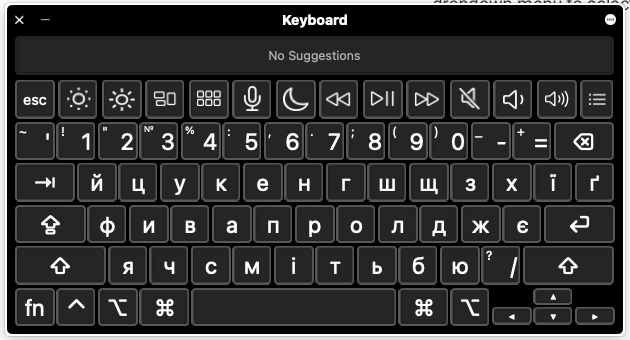
乌克兰语
Choose 乌克兰语 > Ukrainian – Legacy
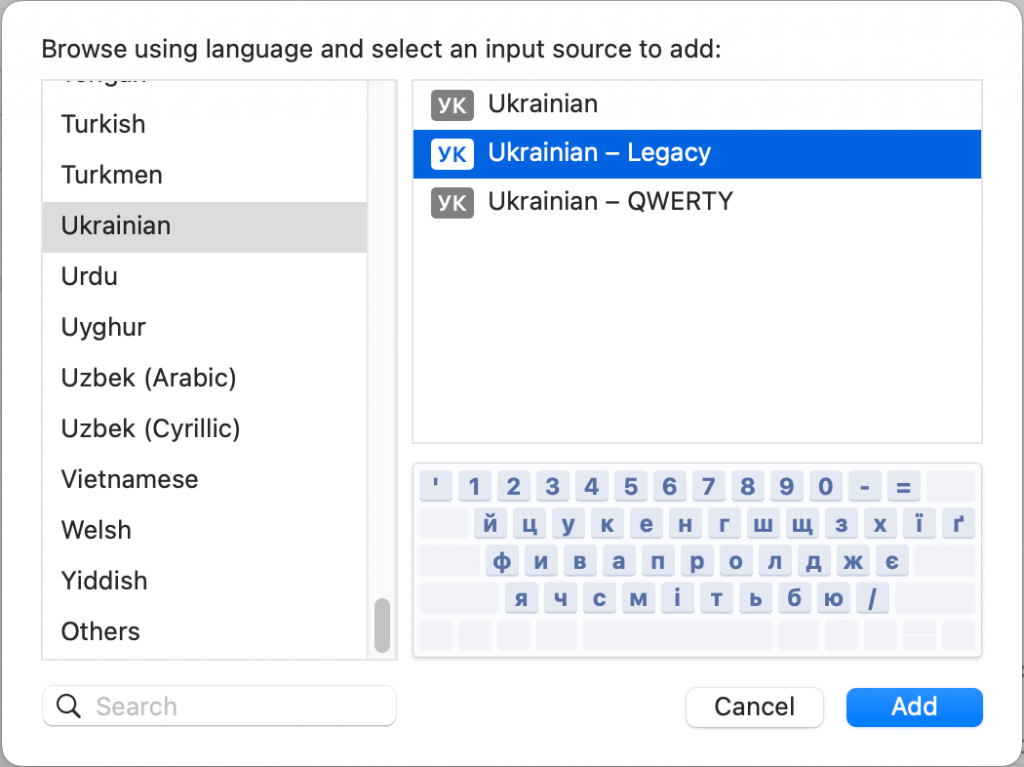
The 乌克兰语 keyboard will look like this:
乌都
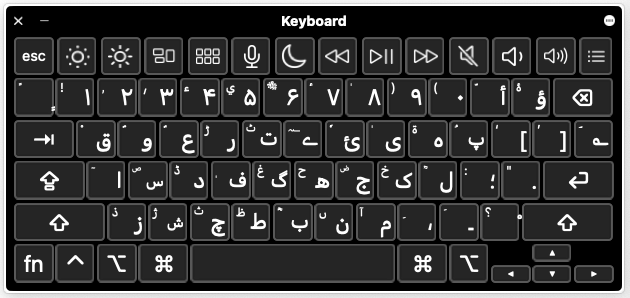
Choose 乌都 > 乌都
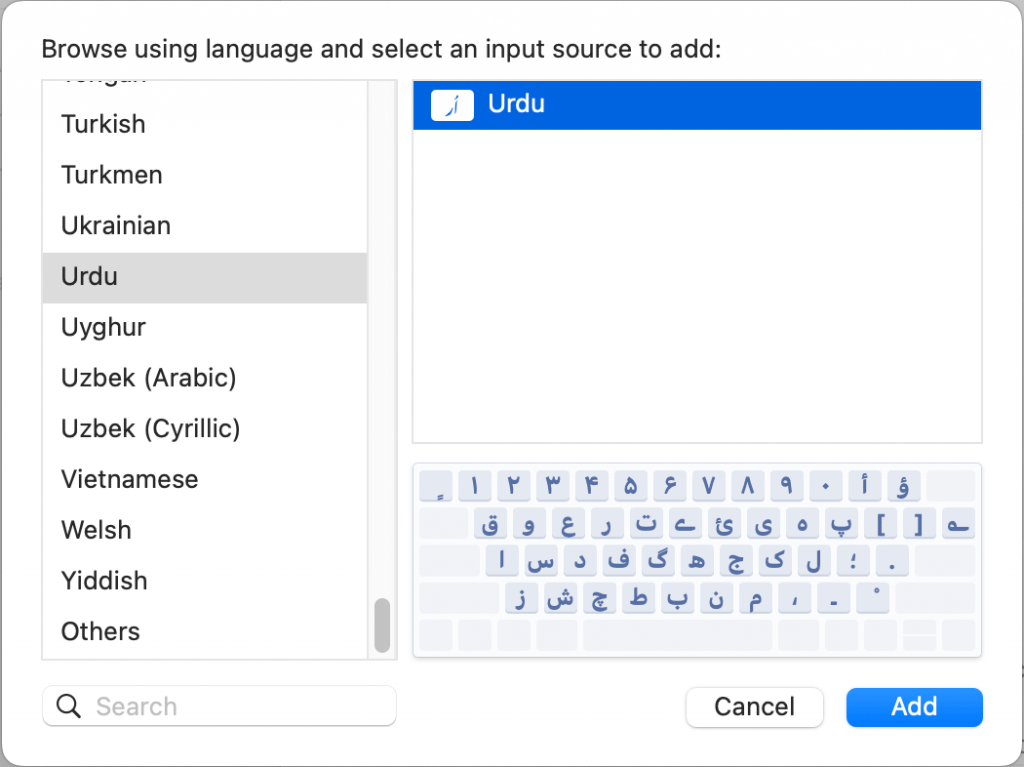
The 乌都 keyboard will look like this:
越南语
Choose 越南语 > 越南语
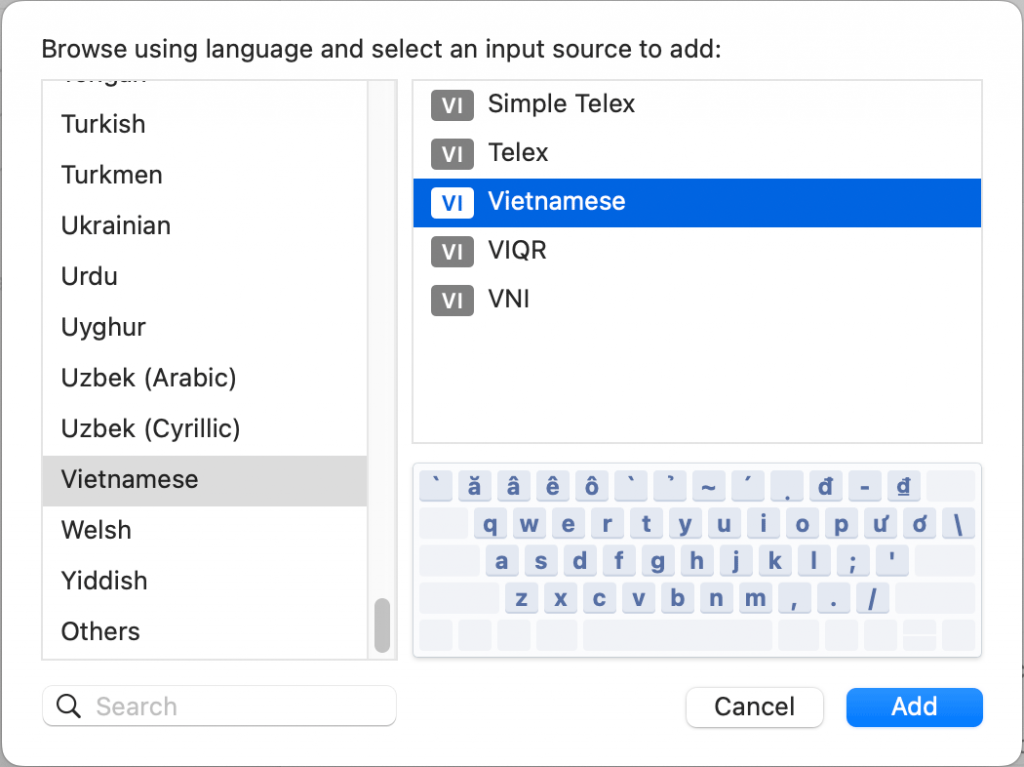
The 越南语 keyboard will look like this: